

The civil war that broke out in Burundi in October 1993 claimed many lives, leading to an increase in the number of orphans, street children, and other vulnerable children. This same crisis has affected the national economy, where many families live in abject poverty and are therefore unable to provide their children with a single meal a day. This is evident both in Bujumbura, the Burundian capital, and throughout the country. As a result, the children of these impoverished families cannot go to school. When they fall ill, they receive no medical care; when they are hungry, they have nothing to eat, and they are dressed in rags. When they are still young, they may beg for food or live on people's charity. This puts them in situations of homelessness. But when they grow up, they often become violent. They often commit robberies and rapes, and can easily be used or manipulated into joining armed gangs. For them, any means are acceptable to try to survive, including crimes of all kinds. These children constitute a ticking time bomb since they have no educational framework that can instill human values in them.
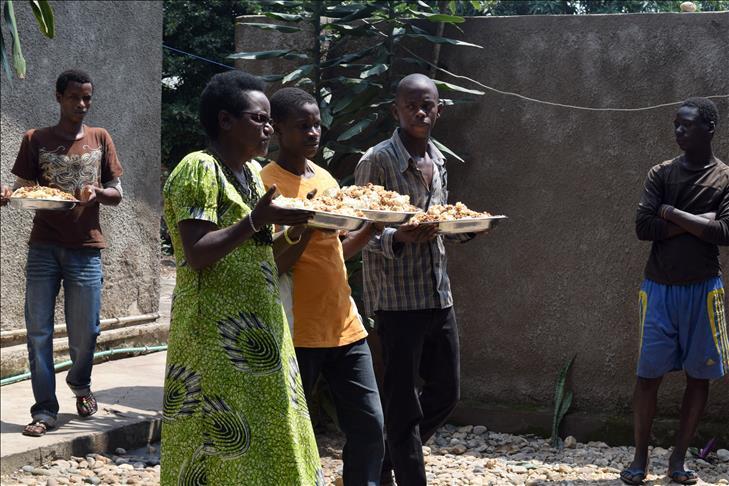
Having become aware of the extent of the danger that society is experiencing because of these children growing up in the streets, and vulnerable children in general, a former Burundian journalist (Ms. Christine Ntahe), has been going to find them, since 1994 in the dumps in the suburbs of the Burundian capital. She then invited them to her home every Sunday (until today), where she serves them a dignified midday meal. This has earned her the nickname of Maman Dimanche. The objective of this Sunday meal has been, from the beginning, to allow these children to find human warmth, affection, a framework for expression where they can be listened to, thus gradually healing the inner wounds of which they are often victims following the consequences of the socio-political crisis that the country has been going through for years. They thus arrive in numbers of 40 to 80 each Sunday to share the Sunday meal, without any distinction. On this occasion, they can allow themselves to laugh, sing, and doze on mats reserved for this purpose. "We have understood that we cannot free them from violence and hatred except by showing them love, attentive listening and affection, and by treating them with dignity," says Ms. Christine. This is also to allow these children, when possible, to return to school, because they are often former schoolchildren who have dropped out due to lack of resources.
Believing that she could not work alone for such a noble cause, she then gathered friends and former colleagues to found an Association in 2000 which they called "Center for the Protection and Supervision of Street Children (CPEER)". The Association was founded to channel and formalize all this work. After six years, noting that the Association was not effectively achieving its objectives, due in particular to the lack of enthusiasm of the founding members, particularly due to the fact that the Association operated without sufficient resources, Ms. Christine gathered nine of the founding members of CPEER in 2006. The goal was to revise the objectives and vocation of the Association to give it a new tone. This is how CPEER changed its name to Bon Geste and was approved under this name as a non-profit association by the supervisory ministry in 2007.
Today, the association still operates on its own funds, which severely limits its ability to achieve its statutory objectives.
Having become aware of the extent of the danger that society is experiencing because of these children growing up in the streets, and vulnerable children in general, a former Burundian journalist (Ms. Christine Ntahe), has been going to find them, since 1994 in the dumps in the suburbs of the Burundian capital. She then invited them to her home every Sunday (until today), where she serves them a dignified midday meal. This has earned her the nickname of Maman Dimanche. The objective of this Sunday meal has been, from the beginning, to allow these children to find human warmth, affection, a framework for expression where they can be listened to, thus gradually healing the inner wounds of which they are often victims following the consequences of the socio-political crisis that the country has been going through for years. They thus arrive in numbers of 40 to 80 each Sunday to share the Sunday meal, without any distinction. On this occasion, they can allow themselves to laugh, sing, and doze on mats reserved for this purpose. "We have understood that we cannot free them from violence and hatred except by showing them love, attentive listening and affection, and by treating them with dignity," says Ms. Christine. This is also to allow these children, when possible, to return to school, because they are often former schoolchildren who have dropped out due to lack of resources.
Believing that she could not work alone for such a noble cause, she then gathered friends and former colleagues to found an Association in 2000 which they called "Center for the Protection and Supervision of Street Children (CPEER)". The Association was founded to channel and formalize all this work. After six years, noting that the Association was not effectively achieving its objectives, due in particular to the lack of enthusiasm of the founding members, particularly due to the fact that the Association operated without sufficient resources, Ms. Christine gathered nine of the founding members of CPEER in 2006. The goal was to revise the objectives and vocation of the Association to give it a new tone. This is how CPEER changed its name to Bon Geste and was approved under this name as a non-profit association by the supervisory ministry in 2007.
Today, the association still operates on its own funds, which severely limits its ability to achieve its statutory objectives.


© 2025 BONGESTE asbl Designed by DSCOMPANY